
Pickling.
Controlled chemical pickling treatments designed to remove heat tint, oxide scale, and surface contamination. We restore clean, corrosion-resistant surfaces for mission-critical industrial components.
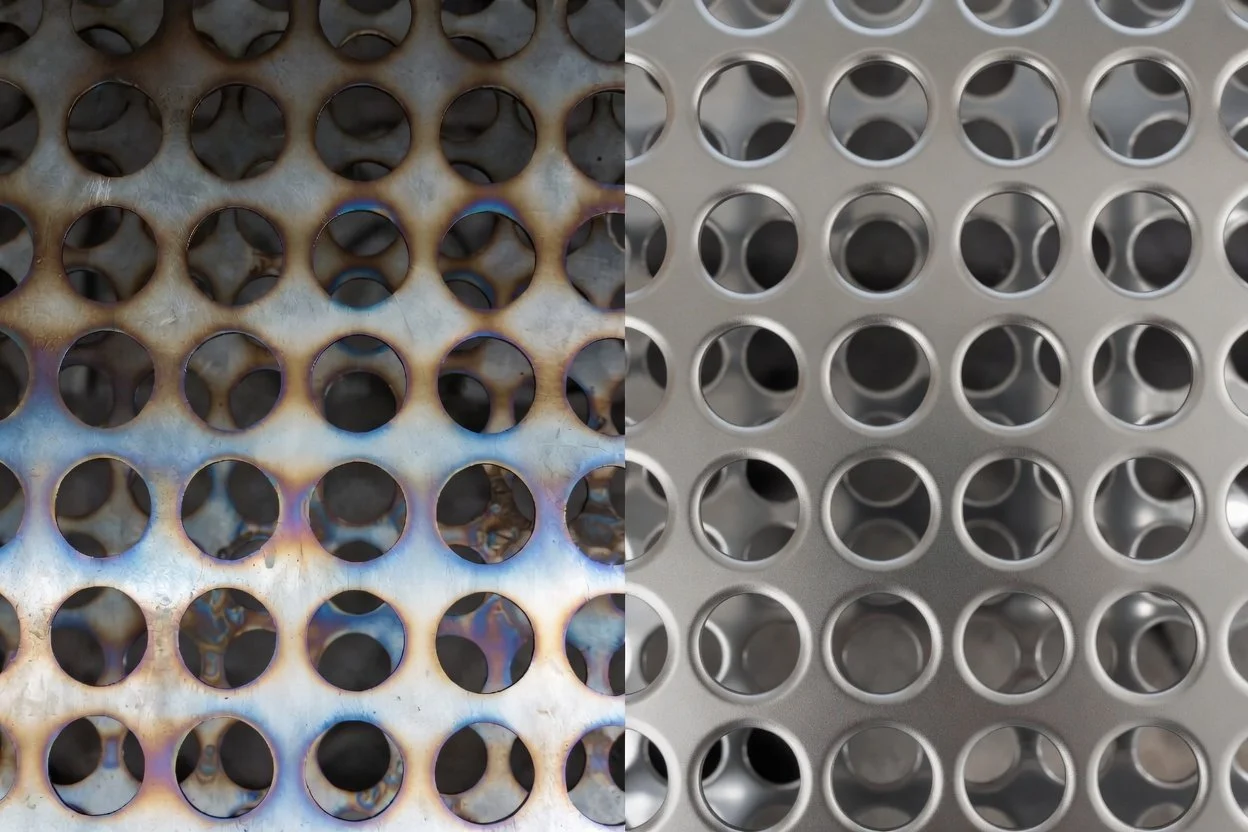
Engineered for Clean, Passive Stainless Steel Surfaces.
Anopol pickling treatments chemically clean and micro-etch stainless steel surfaces, removing weld scale, heat tint, and contaminants while supporting long-term corrosion performance.
Removes Heat Tint & Scale
Pickling removes oxide scale, weld discolouration, and heat-affected surface contamination left behind by fabrication or thermal processing.
Uniform Matt Grey Finish
Correct pickling in formulated dilute acid solutions produces a consistent matt grey surface through controlled chemical micro-etching.
Restores Corrosion Resistance
By removing contamination and damaged oxide layers, pickling prepares stainless steel surfaces to regenerate their natural passive protection.
Flexible Treatment Methods
Components can be treated by immersion, spray-on systems, or localised paste application depending on size and surface condition.
The Science of Controlled Chemical Cleaning.
A carefully managed acid treatment process designed to remove scale, heat tint, and contamination while protecting the integrity of the base material.
01. Surface Assessment
Components are reviewed to identify material grade, contamination level, weld discolouration, and the most appropriate pickling method for the specific alloy.
02. Formulated Acid Treatment
Parts are treated using controlled dilute acid solutions, spray systems, or pickling paste depending on component size, geometry, and the required treatment area.
03. Micro-Etching & Oxide Removal
The process chemically removes surface oxides, scale, and embedded contamination, producing a clean and uniform matt grey finish across the component.
04. Rinsing & Inspection
After treatment, components are thoroughly rinsed and inspected to ensure compliance with international quality standards, such as ISO 9001[cite: 57].
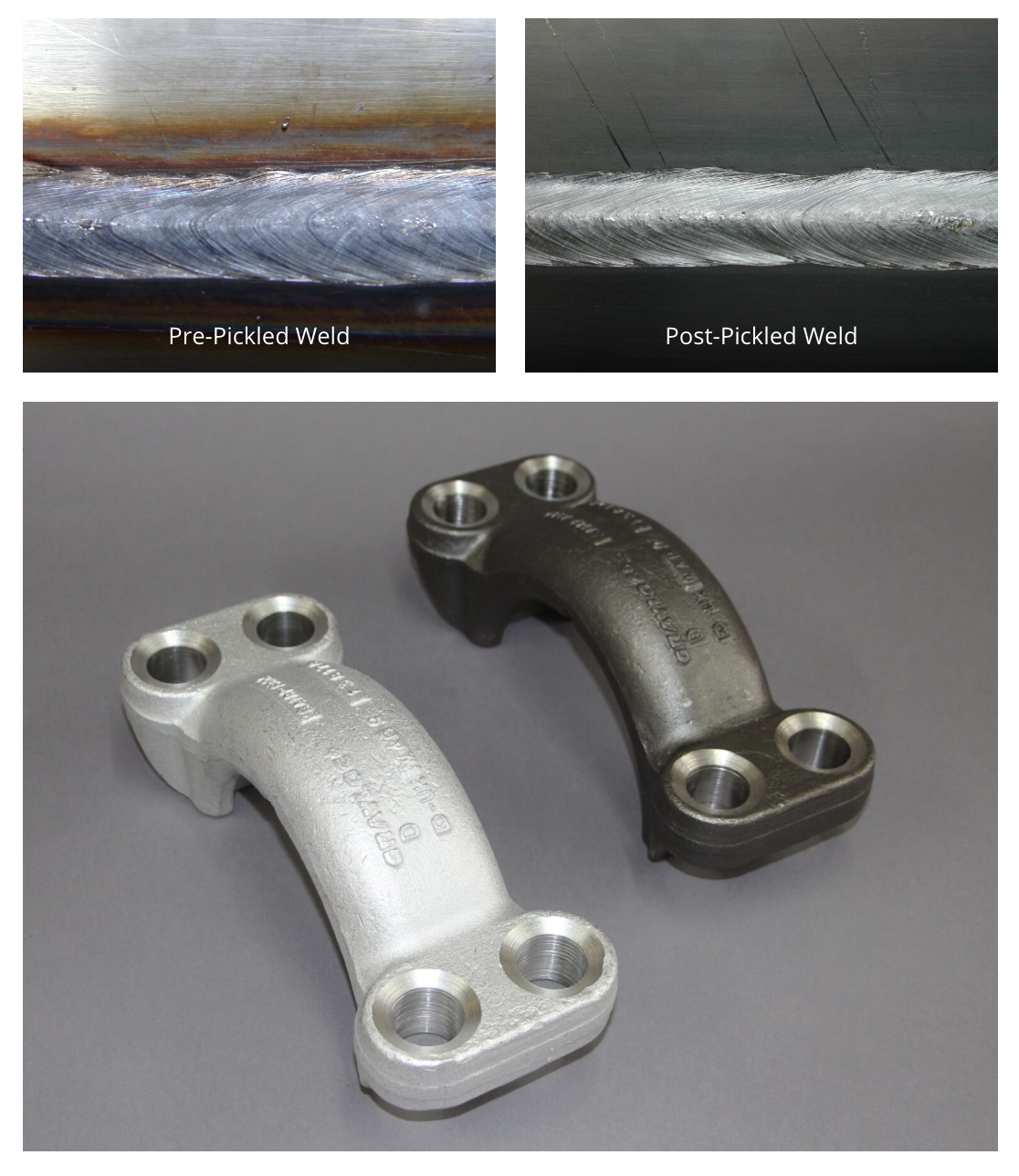
Pickling removes heat tint and oxide contamination to prepare stainless steel for long-term corrosion performance.
Specialist Metals
Beyond Standard
Stainless Steel.
Anopol provides cleaning, pickling, and passivating services in liquid, gel, and paste form for stainless steel and a wide range of specialist metals. Our formulations support materials that require carefully controlled treatment, including less acid-resistant grades.
Built for Fabricated, Welded and Corrosion-Critical Components.
Pickling is widely used where stainless steel surfaces need to be cleaned after fabrication, welding, or exposure to demanding operating environments.
Pickling Insights.
What does stainless steel pickling remove?
Pickling removes heat tint, weld scale, oxide layers, and fabrication residues. This process is essential for restoring a clean, corrosion-resistant surface after welding or thermal processing.
What finish does pickling produce?
Correct pickling typically produces a uniform matt grey finish. This is the result of controlled chemical micro-etching of the stainless steel surface to remove impurities.
Can all stainless steels be pickled the same way?
No. Sulphur-containing grades (303) and lower nickel 400 series stainless steels are more susceptible to acid attack. Anopol uses specialist, formulated pickling solutions to protect these materials.
Is passivation required after pickling?
Passivation is highly recommended for components used in corrosive environments—such as marine, chemical, or pharmaceutical plants—where surfaces may be oxygen-starved.
Can large fabrications be pickled?
Yes. For items too large for immersion tanks, Anopol utilizes spray-on systems or localized pickling pastes to treat specific areas like welds and heat-affected zones.