
From rising costs and international trade pressures to sustainability and innovation, the UK metals industry faces a changing landscape. But for manufacturers working with stainless steel, quality and performance remain essential.
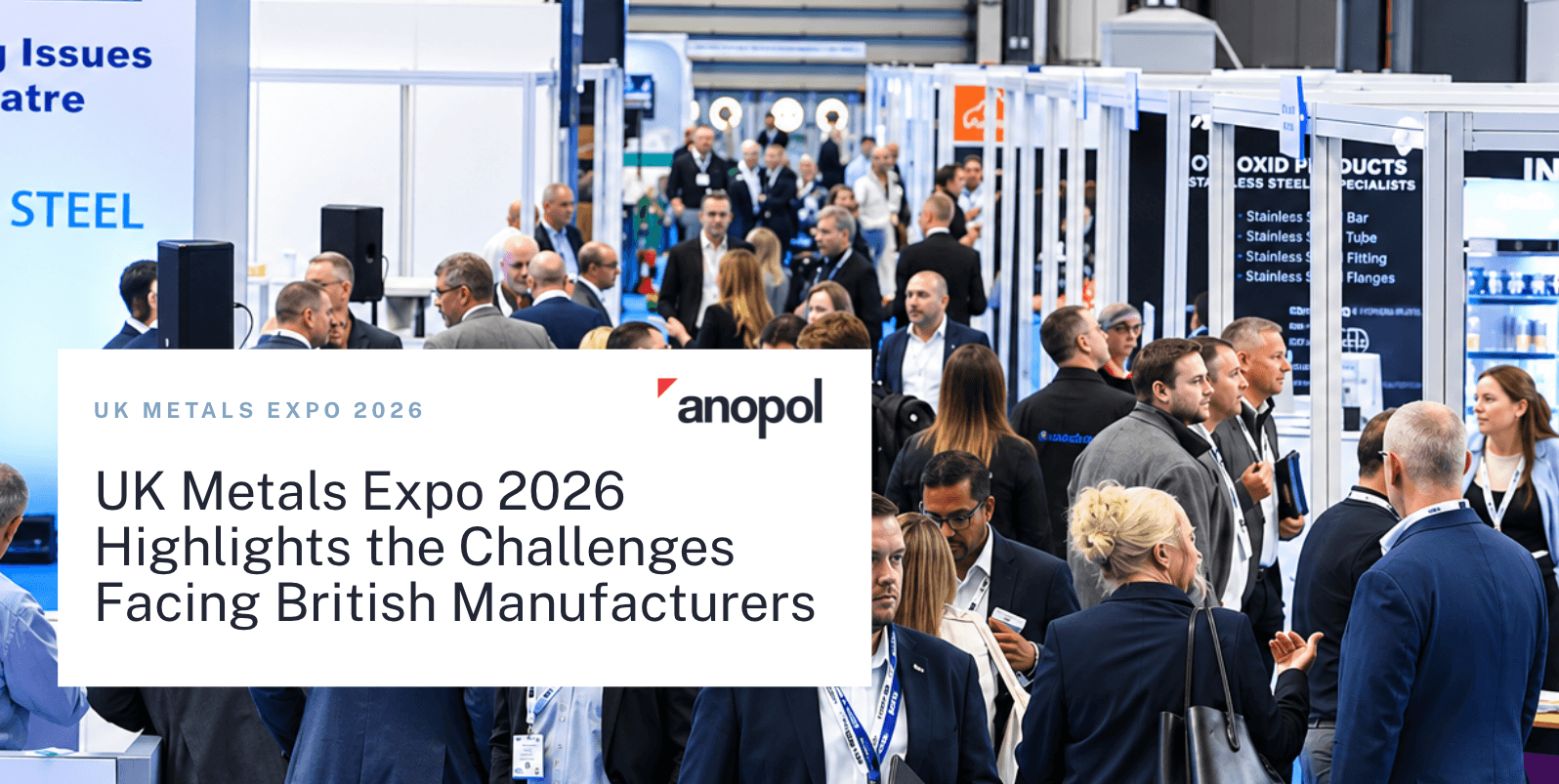
The UK Metals Expo 2026, held at Birmingham's NEC on 4–5 November, brought together representatives from across the metals supply chain to examine the challenges and opportunities facing British manufacturing.
With steel producers, stockholders, fabricators, engineers and industry associations represented, the event provided an important platform for discussing the future of one of the UK's most important industrial sectors.
Among the key subjects on the conference agenda were international trade, tariffs, material costs, supply chain resilience, decarbonisation and manufacturing productivity.
For companies involved in stainless steel processing and finishing, these issues are particularly relevant. As manufacturers look for ways to remain competitive, attention is increasingly turning towards product quality, reliability and the long-term performance of materials.
A Challenging Environment for UK Metals
British manufacturers continue to operate against a backdrop of economic uncertainty, fluctuating material prices and changing international trading arrangements.
Steel tariffs and quotas were prominent subjects at this year's event, with representatives from UK Steel, Tata Steel UK and the British Stainless Steel Association participating in discussions about the implications for the industry.
The conference also addressed the UK's forthcoming Carbon Border Adjustment Mechanism (CBAM), which is expected to influence how certain carbon-intensive imported materials are assessed and traded.
For manufacturers purchasing stainless steel, these developments reinforce the importance of understanding supply chains, managing costs and maintaining consistent quality standards.
While price remains a major consideration, the lowest initial material or processing cost does not always represent the best long-term value.
Why Stainless Steel Quality Matters More Than Ever
Stainless steel remains a critical material across numerous British industries, including food processing, pharmaceuticals, medical equipment, chemical manufacturing and precision engineering.
Its corrosion resistance, durability and hygienic properties make it suitable for demanding applications. However, selecting the correct stainless steel grade is only part of the equation.
Manufacturing processes such as welding, machining, forming and fabrication can affect the condition of a component's surface.
Heat tint, embedded contamination, surface roughness and other imperfections can compromise performance if they are not properly addressed.
This is where specialist stainless steel surface treatments play an important role.
Processes such as electropolishing, pickling and passivation can help manufacturers achieve the surface condition required for their applications, improving consistency and supporting long-term performance.
The Importance of Electropolishing in Modern Manufacturing
As manufacturers focus on productivity, quality and reducing unnecessary costs, electropolishing offers several practical advantages.
Electropolishing is an electrochemical process that removes a controlled amount of material from a metal surface, helping to smooth microscopic irregularities and produce a cleaner, more uniform finish.
For suitable stainless steel components, the benefits can include:
Improved corrosion resistance: By removing surface imperfections and contamination, electropolishing can support the formation of a more uniform passive surface.
Enhanced cleanability: Smoother surfaces can make components easier to clean, particularly in hygienic manufacturing environments.
Reduced surface roughness: Electropolishing can improve surface finish where specific roughness requirements must be achieved.
Improved appearance: A consistent, bright finish can enhance the presentation of manufactured components.
Greater manufacturing consistency: A controlled finishing process can help manufacturers meet defined surface-quality specifications.
These benefits are particularly important where stainless steel components are exposed to moisture, aggressive cleaning procedures or demanding operating conditions.
Sustainability and Getting More From Existing Materials
Sustainability was another major theme at UK Metals Expo 2026, with discussions covering low-carbon metals, recycling, circular supply chains and more efficient manufacturing processes.
For stainless steel manufacturers, sustainability is not simply about the materials being purchased. It also involves how components are manufactured, maintained and used throughout their service life.
Where appropriate, effective surface treatment can contribute to improved component durability and reduce the likelihood of premature deterioration.
By helping manufacturers achieve the required surface quality, specialist finishing processes can form part of a wider approach to material efficiency and product longevity.
Of course, successful surface treatment depends on selecting the correct process for the material, application and operating environment.
Supporting British Manufacturing Through Specialist Surface Finishing
At Anopol, we understand the importance of achieving the correct stainless steel surface finish.
As manufacturers respond to changing market conditions, specialist technical knowledge and reliable processing services remain essential.
Our electropolishing, pickling and passivation services support businesses working with stainless steel across a broad range of industrial applications.
Whether the requirement involves improving surface finish, removing weld heat tint, addressing contamination or supporting corrosion resistance, choosing the appropriate treatment can make a significant difference to the finished component.
The challenges highlighted by UK Metals Expo demonstrate why British manufacturers must continue to invest in quality, technical expertise and efficient production methods.
Looking Ahead: Quality as a Competitive Advantage
The UK metals industry faces significant challenges, but it also has opportunities to strengthen its position through innovation, specialist expertise and high-quality manufacturing.
For businesses working with stainless steel, surface finishing should not be treated simply as the final stage of production. It is an important consideration in achieving the required performance, appearance and durability of the finished product.
As the industry looks towards 2027, manufacturers that combine efficient production with consistent material and surface quality will be better positioned to meet increasingly demanding customer requirements.
Need specialist stainless steel surface finishing?
Anopol provides professional electropolishing, pickling and passivation services for stainless steel components and fabricated assemblies.
Contact the Anopol team to discuss your requirements and discover how the right surface treatment can support your manufacturing processes.