
Why the Next Generation of Manufacturing Leaders Needs More Than Technical Skills
The UK manufacturing sector is changing fast. Supply chains are under pressure, sustainability expectations are rising, and the demand for leaders who can navigate complexity, not just manage processes, has never been greater.
That's why initiatives like the Future Sustainable Manufacturing Leaders programme matter, and why Anopol - UK's market leader in electropolishing and chemical surface treatment processes., was proud to play a part in it.
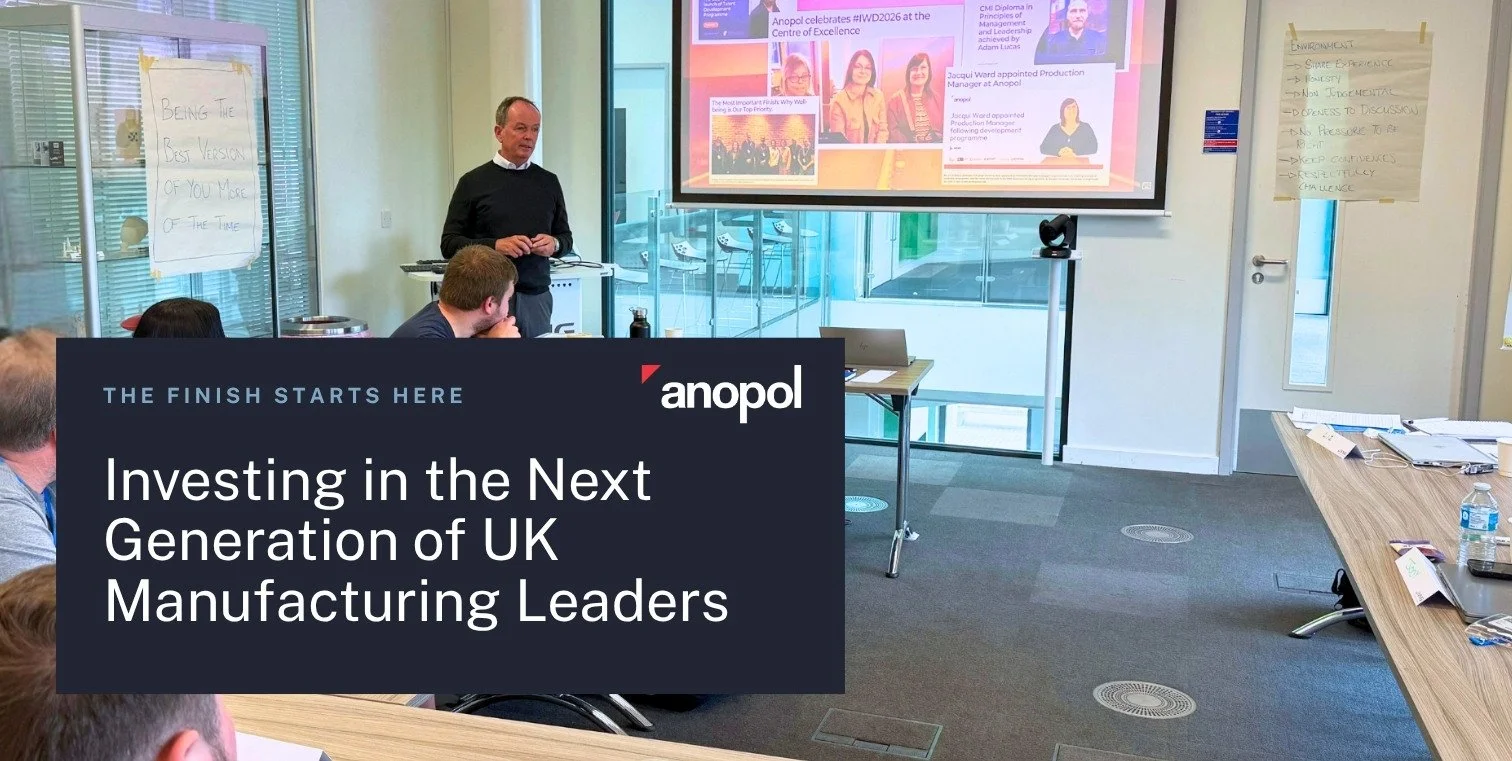
Last week, David Cass, MD at Anopol, joined WMG at the University of Warwick to deliver a session as part of the programme's "Lead Yourself" strand. Organised through Business Growth West Midlands and the West Midlands Combined Authority's Supply Chain Transition Programme, a West Midlands Investment Zone initiative, the session brought together emerging manufacturing professionals looking to bridge the gap between leadership theory and the realities of the factory floor.
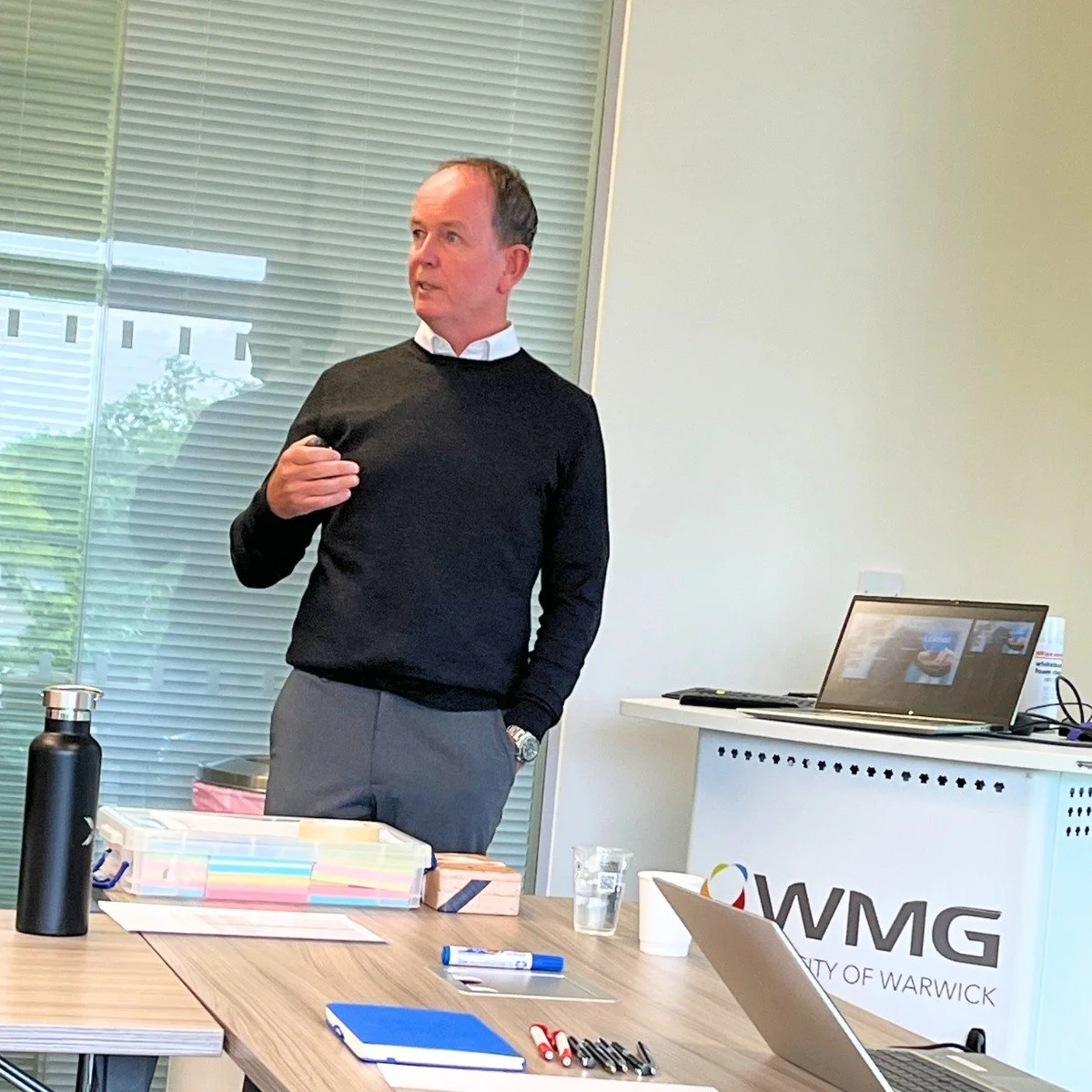
David Cass - Anopol speaking at the event.
From Career Path to Leadership Principles
David opened by tracing his own professional journey, one shaped by varied roles, evolving responsibilities, and the kind of cross-functional experience that rarely follows a straight line.
The message was a practical one: diverse experience isn't a detour, it's the foundation of strong senior leadership. Understanding how different parts of a business operate, and how decisions ripple across them, is exactly what equips leaders to make better calls when it counts.
The Role of Data in Rigorous Decision-Making
A central theme of David's session was the importance of data-driven thinking in modern manufacturing leadership. In an environment where margins are tight and the cost of poor decisions is high, gut instinct alone isn't enough. Rigorous risk assessment, grounded in real data and robust modelling, is how experienced leaders protect their businesses and their teams.
At Anopol, this isn't just a philosophy we talk about. It's embedded in how we operate day to day, from process management through to client work. Sharing that approach with the next generation of leaders felt like a natural extension of what we already do.
Leadership as Personal Accountability
Beyond the technical content, David's presence in the room carried its own message. Mentorship doesn't always arrive in a formal structure, sometimes it's simply a senior practitioner showing up, being transparent about their own path, and demonstrating that personal accountability is what drives industrial excellence over the long term.
That's the kind of role model influence that classroom theory rarely replicates. And it's precisely why programmes like this one, which actively bring industry practitioners into direct dialogue with emerging talent, are so valuable for the sector.
Why Anopol Supports Initiatives Like This
Sustainable growth in manufacturing depends on more than chemistry, process expertise, or technology. It depends on people, specifically, on developing the calibre of leaders who can make sound decisions under pressure, build capable teams, and drive continuous improvement across complex operations.
We're grateful to WMG and the University of Warwick for the invitation, and to the Supply Smarter West Midlands Consortium for the work they're doing through the Supply Chain Transition Programme. Initiatives like this are how the West Midlands manufacturing sector builds the leadership pipeline it needs for the decade ahead.
If you'd like to know more about Anopol's work or how we support the wider manufacturing community, we'd be glad to hear from you.